


Copper(II) acetate
Cu(CH3COO)2·H2O
Product information
Copper(II) acetate
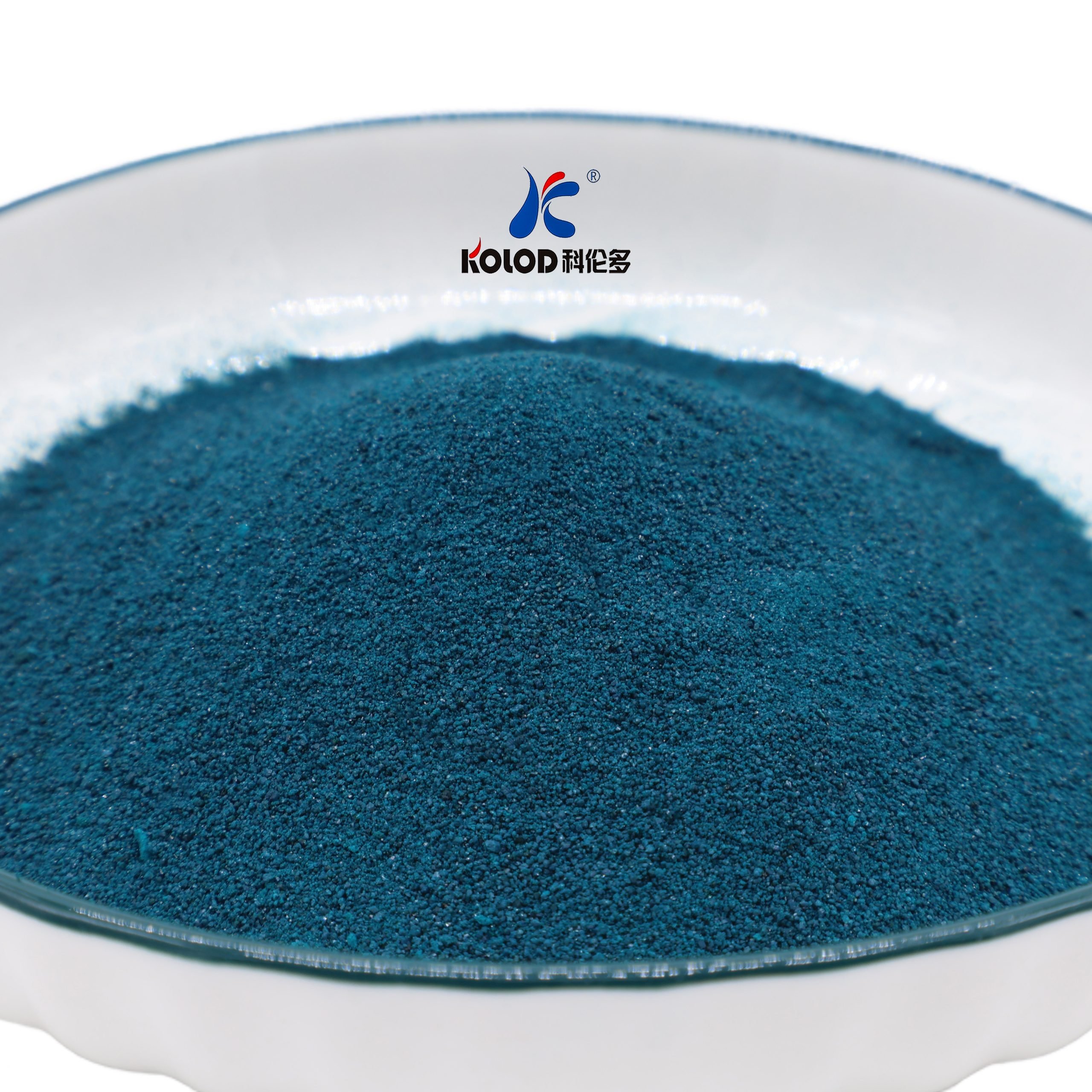
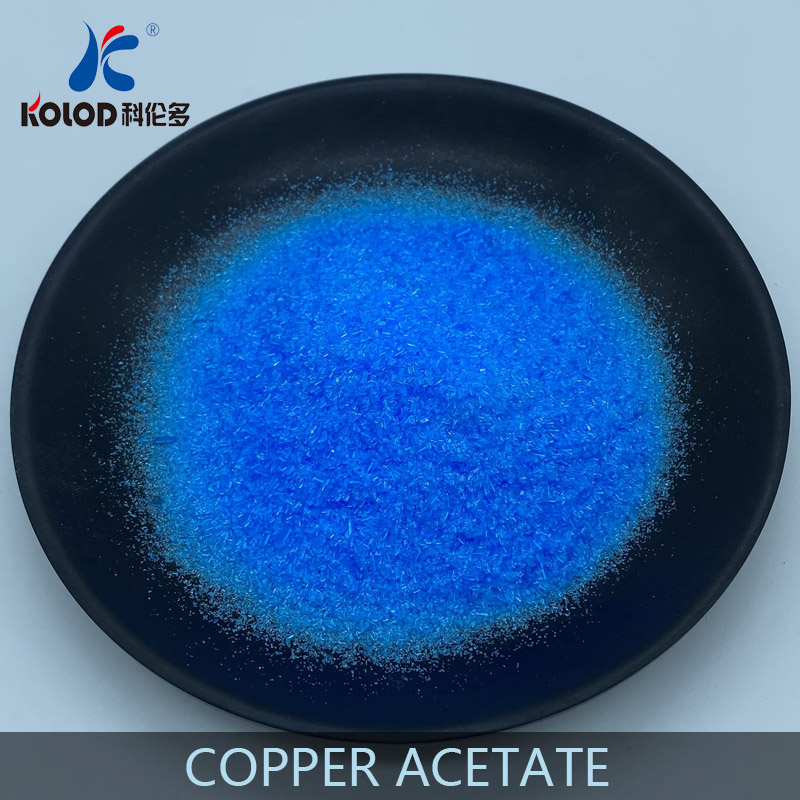
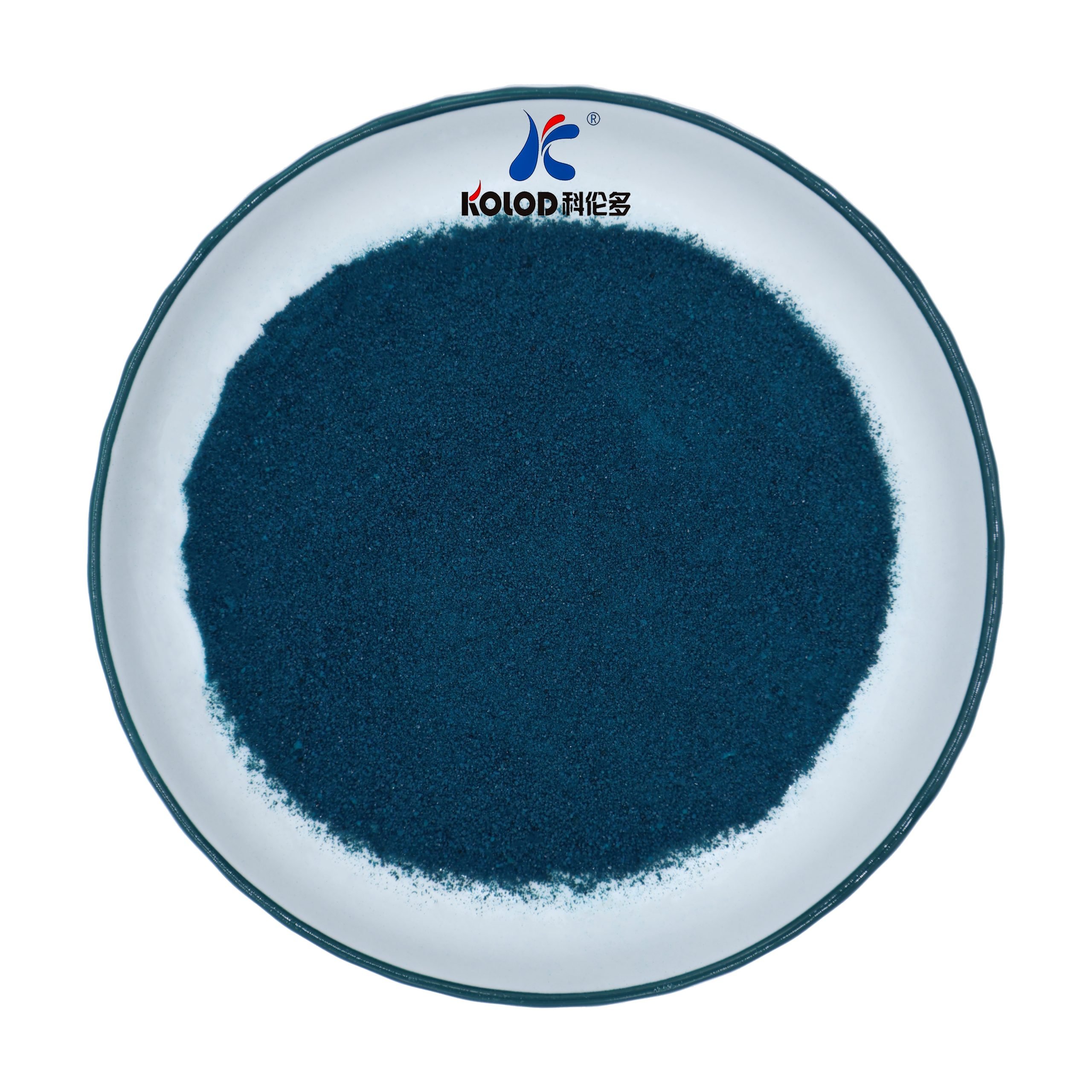
Copper(II) acetate is the copper salt of acetic acid and in its most common form appears as a monohydrate in dark green, water-soluble crystals. Historically, the basic form of this compound is known as verdigris, a patina that forms on copper roofs or copper objects. It is a toxic substance whose ingestion is harmful to health and can cause severe chemical burns. When heated to higher temperatures, it loses its water of crystallization and eventually decomposes to form elemental copper. Due to its copper content, it is used for various technical processes.
Copper(II) acetate has various application areas, particularly in industry and the laboratory. It is used as a color pigment in the paint and ceramic industries to produce blue-green hues, and was previously used in the manufacture of the highly toxic pigment Paris Green. In organic synthesis, it serves as a catalyst in various chemical reactions, such as in so-called Click Chemistry. In agriculture, it can be used as a fungicide due to its fungicidal effect. Furthermore, it was also used in the past in medicine as a mild caustic agent and can provide a green flame coloration in fireworks.
25kg | BigBags

Mit Produktmanager in Kontakt treten
Einfach das Formular ausfüllen
Molecular Formula : Cu(CH3COO)2·H2O
Molecular Weight: 199.658
CAS: 6046-93-1
| Specification | HG3-975-76 | |
| Analysis Pure | Chemically pure | |
| Content(Cu(CH3COO)2·H2O),w/% ≥ | 99 | 98 |
| Insoluble substances,w/% ≤ | 0.02 | 0.05 |
| Sulfates (SO4),w/% ≤ | 0.01 | 0.02 |
| Nitrates,w/% ≤ | 0.01 | ——— |
| Chlorides (Cl),mg/kg ≤ | 30 | 50 |
| Iron (Fe), mg/kg ≤ | 20 | 50 |
| Lead (Pb),mg/kg ≤ | 20 | 5 |
| Non-sludging to hydrogen sulfide,w/% ≤ | 0.1 | 0.3 |